Gravity Irrigation Design: LiDAR Slope Data for Channels
February 25, 2026
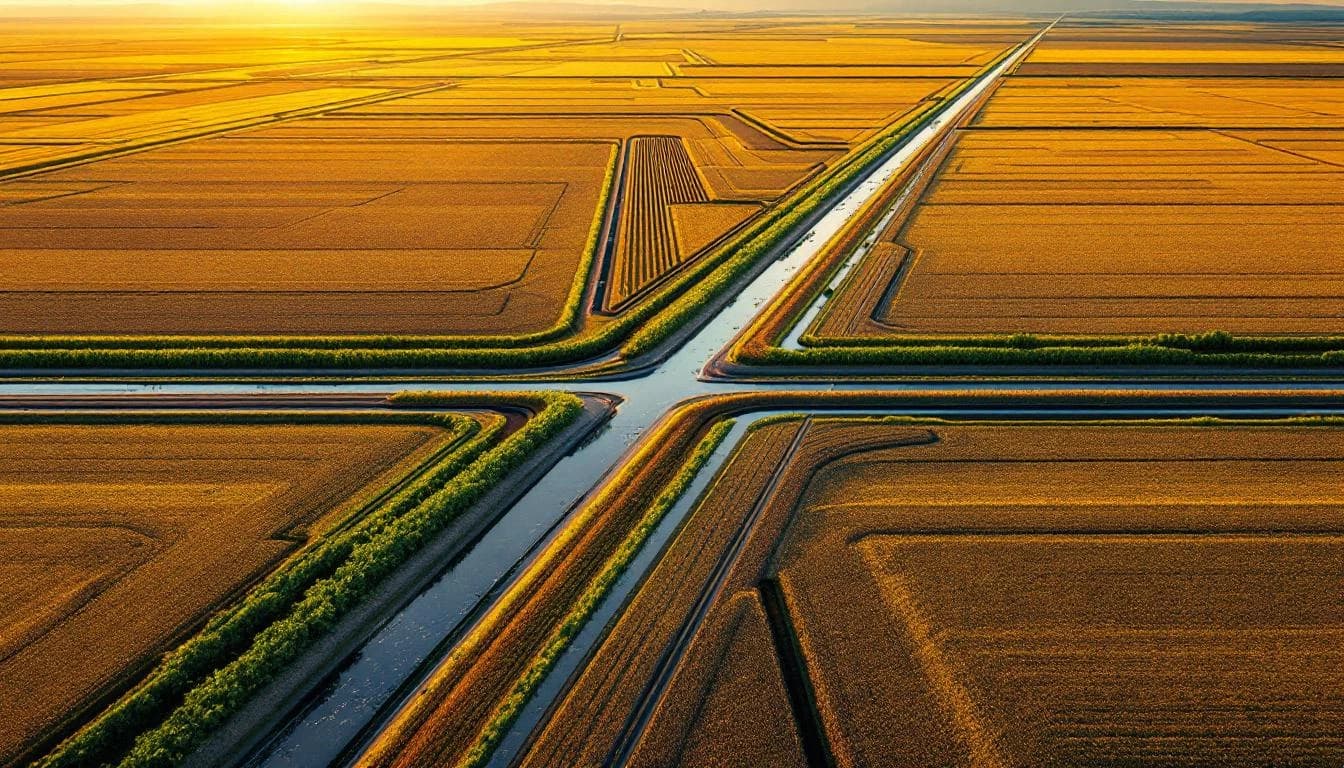
Gravity-fed irrigation is the oldest and most widespread method of delivering water to crops. Despite advances in pressurized sprinkler and drip systems, gravity irrigation — including furrow, border, and basin methods — remains the dominant irrigation approach for millions of acres because of its low capital cost and simplicity.
But gravity irrigation has a design problem: it depends entirely on slope.
Water in a gravity channel follows the elevation gradient. If the slope is too steep, water moves too fast, causing erosion and delivering uneven application. If the slope is too shallow, water moves too slowly, spreading laterally, ponding, and failing to reach the end of the field. If the slope is inconsistent — which is the most common problem — some sections flood while others stay dry.
Designing a gravity irrigation system that actually works requires knowing the exact topography of the field it will serve. The USDA-NRCS National Engineering Handbook provides design standards, but those standards assume access to accurate elevation data. And until recently, getting that data at the necessary precision was either prohibitively expensive or simply unavailable.
The Slope Problem
The fundamental design parameter for any gravity-fed channel is its longitudinal slope — the rate of elevation change along the channel's length. For most agricultural gravity irrigation, optimal channel slopes fall in a narrow range:
These are small numbers. A 0.2% slope means just 2 centimeters of elevation change over 10 meters. At this scale, the invisible micro-topography of a field — those 5 to 15 cm variations that are undetectable by eye — completely dominates the hydraulic behavior of the irrigation system.
A channel designed to follow a 0.2% grade will not perform as designed if the underlying terrain has undulations of 8 to 12 centimeters along its route. Water will pond in the low spots, accelerate over the high spots, and deliver uneven application that defeats the purpose of the infrastructure.
How Traditional Design Fails
The traditional approach to gravity irrigation design uses a combination of visual assessment, limited spot elevations, and general knowledge of the field's topography. A few elevation readings are taken along the proposed channel route, a constant design slope is assumed between measurement points, and the channel is graded accordingly.
This approach fails in predictable ways:
Interpolation errors. Between sparse measurement points, the design assumes a smooth, consistent surface. In reality, the surface between those points contains undulations that the measurements missed. The channel grade that looks uniform on paper encounters terrain features that weren't captured.
Cumulative alignment errors. Small errors in channel alignment accumulate over distance. A channel that starts on-grade but deviates slightly — because the terrain between measurement points wasn't what the design assumed — arrives at its destination at the wrong elevation. The last third of the field receives too much water, or not enough.
Static design limitations. Traditional survey captures the terrain at a few dozen points across a field that contains millions of relevant micro-features. The design is only as good as the sample, and a sparse sample on a complex surface produces an inaccurate representation.
What LiDAR Brings to Irrigation Design
A drone LiDAR scan of an agricultural field captures millions of elevation points at sub-5 cm vertical accuracy. The resulting DEM provides a continuous, complete representation of the field surface — not a sample of it.
With this data, irrigation design shifts from assumption-based to evidence-based:
Optimal channel routing. Instead of choosing a channel route visually and hoping the slope works out, the DEM allows evaluation of every possible route across the field. Software can identify the path that maintains the most consistent design slope with the minimum earthwork — a calculation that is impossible without continuous surface data.
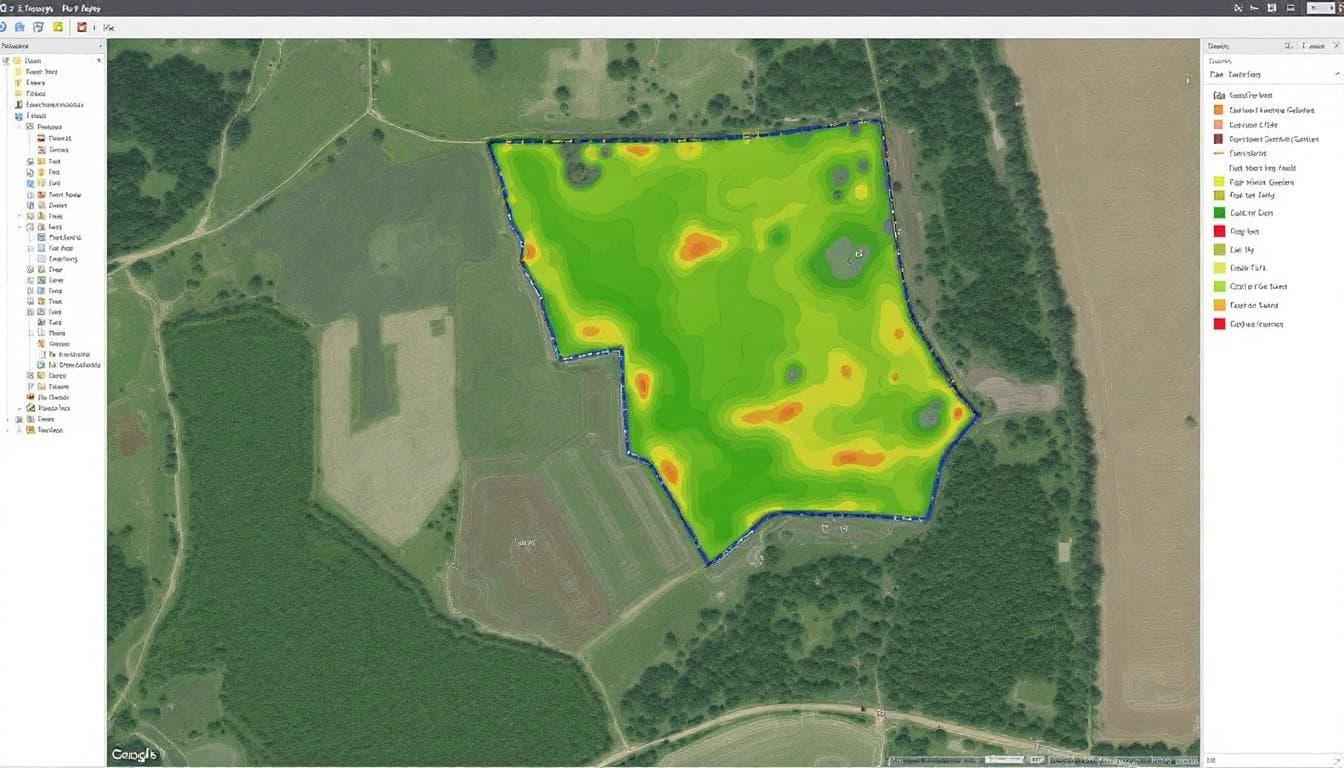
Drop structure placement. Where the natural terrain drops too steeply for the design channel slope, drop structures (small vertical drops that dissipate energy) are needed. With LiDAR data, these can be placed at exactly the right locations and heights, rather than estimated in the field during construction.
Field leveling specifications. For basin and border irrigation, the field surface itself must be graded to a target slope. LiDAR data provides cut/fill calculations at every point across the field, allowing precision laser leveling that achieves the design surface with minimum earth movement.
Hydraulic modeling. With the true field surface known, the hydraulic performance of the proposed irrigation system can be simulated before anything is built. This shows advance time (how long water takes to reach the end of the field), recession time, infiltration depth at every point, and application uniformity. If the simulation shows poor performance, the design is adjusted on a screen, not in the dirt.
Design Workflow with LiDAR Data
The practical workflow for LiDAR-informed gravity irrigation design follows a clear sequence:
1. Terrain scan. A drone LiDAR flight captures the complete field surface. Optimal timing is post-harvest or pre-planting when crop canopy is minimal. The flight takes 30 to 90 minutes depending on field size.
2. Surface analysis. The resulting DEM is analyzed for slope distribution, drainage patterns, depression identification, and soil surface characterization. This analysis identifies the natural drainage tendencies of the field and the magnitude of the leveling challenge.
3. Channel route optimization. Using the DEM and design slope parameters, potential channel routes are evaluated for grade consistency, earthwork volume, and hydraulic performance. The optimal route minimizes construction cost while maximizing irrigation uniformity.
4. Leveling design. For fields that require surface grading, the DEM provides the existing surface for cut/fill calculation against the designed surface. The resulting grade plan specifies the depth of cut or fill at every point — data that can be loaded directly into GPS-guided laser leveling equipment.
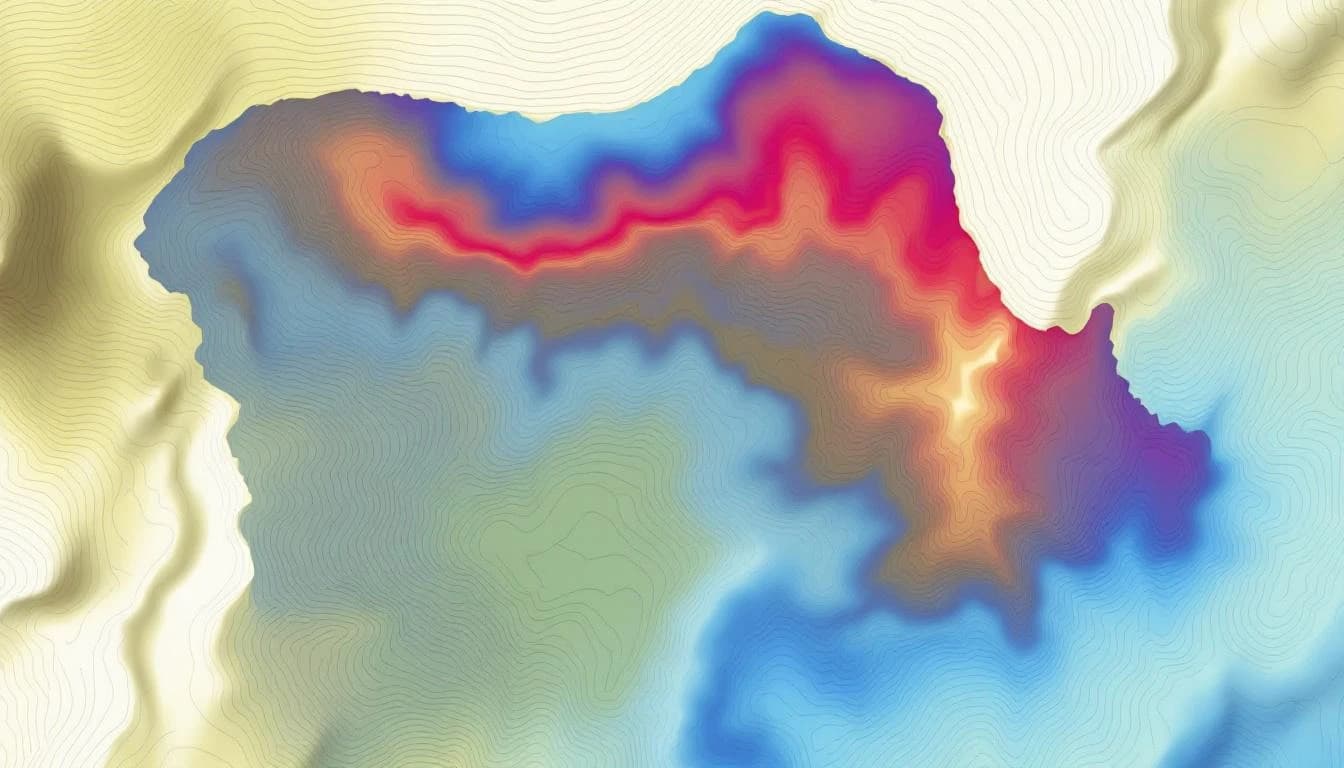
5. Construction verification. After channel construction and field leveling are complete, a second LiDAR scan verifies that the as-built surface matches the design. Any deviations are identified immediately, not discovered during the first irrigation event.
The Economics of Precision
Gravity irrigation infrastructure is permanent. Channels, leveled fields, and drop structures represent significant capital investment that will serve for decades. Getting the design right the first time is far more economical than discovering problems after construction.
A LiDAR scan for irrigation design typically adds 3 to 8 percent to the total cost of an irrigation infrastructure project. The potential savings from avoided rework, optimal earthwork volumes, and improved irrigation uniformity routinely exceed 10 to 20 percent of project cost.
Perhaps more importantly, a well-designed gravity system based on accurate terrain data delivers measurably better water application uniformity. As FAO gravity irrigation guidelines emphasize, when every row of a field receives within 10 percent of the target water application — rather than the 30 to 50 percent variation common with conventionally designed systems — the yield response is immediate and sustained.
Beyond the Initial Design
Terrain data from a LiDAR scan has a useful life well beyond the initial irrigation design. The same dataset supports:
For farms investing in water infrastructure, a terrain scan is not a project cost — it is an asset that informs better decisions across every aspect of land and water management.